Le migliori alternative a Customer.io
Customer.io è forte quando eventi di prodotto, dati profilo e timing dei messaggi devono lavorare insieme. La migliore alternativa dipende da cosa vuoi: uno strumento SaaS più semplice, una piattaforma di engagement più ampia, o un layer di consegna che controllano i tuoi ingegneri.
La risposta breve: per semplificare vai su Loops o Userlist; per salire di scala multicanale su Braze o Iterable; per un unico workspace più economico, con automazioni ed email transazionali insieme, su Brevo.
Sintesi
Semplicità SaaS → Loops o Userlist. Lifecycle prodotto senza piattaforma enterprise. Scala multicanale → Braze. Email, push, in-app ed esperimenti. Un solo workspace e budget ridotto → Brevo. Campagne, automazioni e transazionale insieme, con piano Standard da 18 $/mese. Eventi + vendite → ActiveCampaign. Scoring e passaggi commerciali.
Confronto rapido
| Alternativa | Ideale per | Prezzo | Compromesso principale |
|---|---|---|---|
| Loops | Lifecycle startup focalizzato | Gratis fino a 1.000 contatti; 99 $/mese a circa 10.000 (listino) | Meno orchestrazione complessa |
| Userlist | Onboarding SaaS | Piani a contatti | Ecosistema più stretto |
| Braze | Enterprise multicanale | Su preventivo | Implementazione enterprise |
| ActiveCampaign | Scoring e vendite | 15 $/mese | Più amministrazione |
| Brevo | Campagne + transazionale | 9 $/mese | Meno profondità eventi |
Loops e Userlist: semplificare senza perdere il SaaS
Loops è il passo indietro sensato per startup che vogliono email attivate dal prodotto senza una customer-engagement platform: meno superficie, stessa logica di onboarding. Userlist tiene centrali utenti, account e comportamento prodotto, perfetto per lifecycle senza una suite generalista.
In entrambi i casi verifica i bordi prima di migrare: storia eventi, stati account, re-entry e reportistica. Un setup più semplice copre casi più stretti — assicurati che siano i tuoi.
Quanto pesa davvero il canone di Customer.io
La pagina prezzi di Customer.io indica Essentials da 100 $/mese con fatturazione mensile e Premium da 1.000 $/mese con fatturazione annuale. Per un team piccolo la spesa non è solo il canone: contano le ore settimanali per mantenere eventi e segmenti, e quelle nel listino non compaiono.
Chi ha raccolto meno di 10 milioni di dollari può chiedere lo Startup Program, che secondo la stessa pagina vale un anno gratuito. Prima di migrare per risparmiare, controlla se rientri: cambiare piattaforma durante un anno gratuito raramente conviene.
Braze e Iterable: salire di scala
Il percorso di upgrade quando Customer.io non basta più per email, push, in-app e sperimentazione in tempo reale. Potenza multicanale vera, al prezzo di governance eventi, ambienti QA, proprietà della deliverability e budget operativo maggiore.
Migra solo con tassonomia eventi congelata e team dedicato: cambiare piattaforma senza governo dati sposta solo il caos più in alto.
ActiveCampaign e Brevo: pragmatismo SMB
ActiveCampaign quando ai journey servono anche scoring, vendite e nurture complesso. Brevo quando una realtà piccola vuole campagne, automazioni base e transazionale in un unico workspace accessibile — tenendo separati stream e consensi.
Entrambi sacrificano profondità eventi in cambio di operabilità: la scelta giusta se il collo di bottiglia è il team, non i dati.
Quando ha senso lasciare Customer.io?
Quando paghi potenza inutilizzata (team piccolo, eventi semplici) o quando ti serve billing nativo che non avrà mai. Resta se orchestri decine di eventi con team dedicato: lì non ha rivali a quel prezzo.
Quale migrazione è più facile?
Verso Loops o Userlist: stesso vocabolario SaaS, settimane non mesi. Verso Braze: progetto enterprise. Verso Brevo o ActiveCampaign: rapida se le automazioni attuali sono lineari, più lunga se dipendono da molti eventi di prodotto.
E per ecommerce?
Klaviyo: eventi di catalogo e acquisto nativi, che Customer.io tratta come eventi generici. Per store seri non c'è confronto.
Verdetto
Semplifica con Loops/Userlist, scala con Braze, scegli Brevo se ti serve un unico workspace economico. La migrazione riesce solo con identità, eventi e proprietà definiti prima. Vedi anche la classifica completa e le altre alternative.
Cosa misura il listino di Customer.io e come confrontarlo
Customer.io non fa pagare per indirizzi email ma per profili, cioè per le persone e gli oggetti che tieni nel workspace, oltre al volume di invii. Questo cambia il confronto con strumenti che contano gli iscritti.
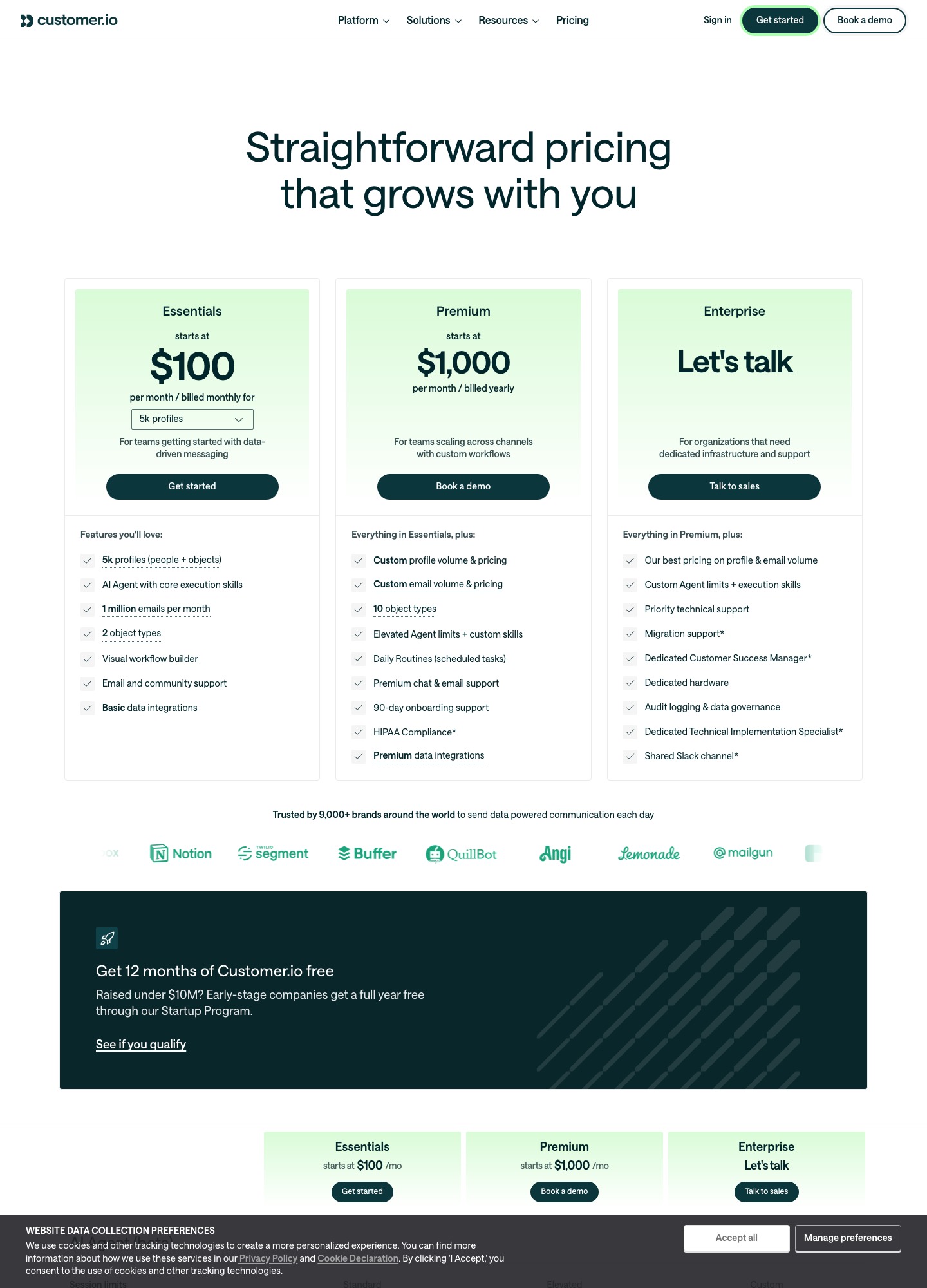
| Voce | Cosa indica la pagina prezzi | Perché pesa nel confronto |
|---|---|---|
| Essentials | Da 100 $/mese con fatturazione mensile, per 5.000 profili, 2 tipi di oggetto e fino a 1 milione di email al mese | Il prezzo di ingresso è alto per un'attività che manda solo newsletter, ragionevole per chi ha eventi di prodotto da usare |
| Premium | Da 1.000 $/mese con fatturazione annuale, profili e invii a volume personalizzato, 10 tipi di oggetto | È la fascia in cui il confronto con Braze e Iterable diventa realistico |
| Profili, non iscritti | Contano le persone presenti nel workspace, non quante hanno aperto una mail | Prima di migrare conviene ripulire profili inattivi, altrimenti li paghi su qualunque piattaforma che li conti |
| Piano gratuito | Non c'è un piano gratuito permanente; lo Startup Program offre un anno ai team che hanno raccolto meno di 10 milioni di dollari | Chi rientra nel programma dovrebbe rimandare il confronto fino alla scadenza dell'anno |
| Email transazionali e SMS | Le email transazionali sono incluse nei piani indicati; i volumi SMS sono personalizzati | Verso Brevo o Loops chiediti se il traffico transazionale entra nello stesso piano o va comprato a parte |
Da Customer.io a dove: la scelta in base al team che hai
| Com'è fatto il tuo team | Direzione | Cosa cambia nel lavoro quotidiano |
|---|---|---|
| Uno sviluppatore part-time e un marketer | Loops o Userlist | Meno configurazione, ma anche meno ambienti e meno controllo sugli oggetti |
| Nessuno che curi gli eventi di prodotto | Brevo o ActiveCampaign | Si passa da segnali dell'app a regole su iscrizione, clic e acquisto |
| Un team dati e più canali da orchestrare | Braze o Iterable | Più potenza e più governance, con tempi di implementazione da progetto |
| Vendite che lavorano i lead del prodotto | ActiveCampaign | Scoring e passaggi al CRM entrano nello stesso flusso |
| Le campagne promozionali costano troppo | Tieni Customer.io per i flussi e sposta le newsletter | Due sistemi da tenere allineati sulle disiscrizioni |
| Un negozio online con catalogo | Klaviyo (listino sul sito del vendor) | Gli eventi di acquisto arrivano già strutturati |
Per scegliere con più dati leggi il confronto Customer.io contro Userlist e la guida agli strumenti per le email comportamentali.
Cinque passaggi per uscire da Customer.io senza perdere i flussi
- Doppio invio degli eventi: per qualche settimana fai arrivare gli stessi eventi sia a Customer.io sia al nuovo strumento, così confronti chi riceve cosa prima di spegnere il vecchio.
- Campagne con ingressi e uscite: per ogni journey annota condizione di ingresso, condizione di uscita e regola di re-entry; sono le informazioni che le esportazioni non portano con sé.
- Template con variabili: elenca gli attributi usati nel testo delle email e verifica che il nuovo strumento li riceva con lo stesso nome.
- Sottodomini di invio: tieni separati il traffico transazionale e quello promozionale, ciascuno con SPF, DKIM e DMARC propri.
- Chiusura graduale: disattiva i flussi uno alla volta, lasciando aperto l'account fino a quando nessuna persona è più dentro un percorso in corso.
Il lessico degli eventi, spiegato per chi migra
| Termine | Significato operativo |
|---|---|
| Profilo | Il record di una persona con attributi ed eventi. È l'unità su cui Customer.io calcola il canone, non l'indirizzo email. |
| Evento | Un'azione compiuta nel prodotto (registrazione, attivazione di una funzione, pagamento) inviata alla piattaforma con un nome e alcune proprietà. |
| Oggetto | Entità diversa dalla persona, per esempio un account aziendale o un abbonamento, a cui collegare più profili. |
| Identificativo utente | Chiave con cui lo stesso utente viene riconosciuto nel prodotto e nella piattaforma. Se cambia durante la migrazione, lo storico si spezza. |
| Re-entry | Regola che stabilisce se una persona può rientrare nello stesso journey una seconda volta. Una regola dimenticata genera messaggi doppi o mancanti. |
| Soppressione | Elenco di indirizzi a cui non si deve scrivere più. Va portato da un sistema all'altro e tenuto sincronizzato se i due convivono. |
Clausole da rileggere prima di spegnere Customer.io
| Clausola | Cosa controllare | Nota |
|---|---|---|
| Fatturazione mensile o annuale | Essentials si paga mese per mese, Premium con impegno annuale: capisci quando puoi uscire senza penali | Se passi a Premium solo per avere più profili, calcola cosa perdi uscendo prima di dodici mesi. |
| Esportazione di eventi e profili | Se riesci a estrarre lo storico degli eventi, non solo gli indirizzi, e in quale formato | Senza lo storico i nuovi segmenti ripartono da zero. |
| Regione dei dati | La pagina prezzi cita data center negli Stati Uniti e nell'Unione europea: verifica in quale regione si trova il tuo workspace | Spostare dati tra regioni è un trattamento in più da documentare. |
| Supporto e passaggio a Premium | Canali inclusi nel piano (e-mail e community su Essentials, supporto premium su Premium) | Chiedi per iscritto cosa è incluso prima di firmare il piano più alto. |
Domande frequenti
Quanto costa Customer.io e esiste un piano gratuito?
La pagina prezzi di Customer.io indica Essentials da 100 $/mese con fatturazione mensile e Premium da 1.000 $/mese con fatturazione annuale; il volume di profili è personalizzato. Un piano gratuito permanente non è previsto, ma le aziende early-stage che hanno raccolto meno di 10 milioni di dollari possono chiedere lo Startup Program, che offre un anno gratuito. Se rientri, valuta bene se cambiare piattaforma proprio durante quell'anno.
Posso tenere Customer.io solo per i flussi comportamentali?
Sì, ed è spesso la scelta più sensata: i journey guidati da eventi di prodotto restano dove stanno e le newsletter o le campagne promozionali si spostano su uno strumento più economico come Brevo o MailerLite. Il rischio è duplicare i profili e perdere coerenza nelle disiscrizioni, quindi serve un'unica fonte per i consensi. Finché i due sistemi si scambiano le soppressioni, il costo complessivo scende senza rinunciare alla logica a eventi.
Cosa devo preparare prima di migrare eventi e segmenti?
Prima di spostare qualsiasi cosa serve un elenco congelato di eventi e attributi con nome, significato e sistema di origine. Poi vanno mappati gli identificativi degli utenti (ID interno ed email), le regole di ingresso e uscita di ogni campagna e lo storico che le automazioni leggono. Chi salta questo passaggio finisce per ricostruire i journey sulla base di segnali incompleti e per inviare messaggi sbagliati nelle prime settimane.
Customer.io è adatto a una società italiana soggetta al GDPR?
La stessa pagina prezzi cita GDPR, CCPA, ISO 27001, SOC e la possibilità di scegliere data center negli Stati Uniti o nell'Unione europea. Per una società italiana resta comunque necessario firmare l'accordo di trattamento dei dati, indicare il fornitore nell'informativa e scegliere consapevolmente la regione di hosting. Valgono le stesse verifiche per Brevo, ActiveCampaign o Braze: la sede del fornitore non sostituisce il lavoro sul consenso.
Una PMI senza sviluppatori ha davvero bisogno di Customer.io?
Di solito no: la piattaforma dà il massimo quando un team tecnico invia eventi dal prodotto e qualcuno cura segmenti e journey con continuità. Per un'azienda che manda newsletter, un benvenuto e qualche automazione sul carrello o sull'iscrizione, Brevo (da 9 $/mese per il piano Starter, 18 $/mese per Standard con automazioni) o ActiveCampaign coprono lo stesso bisogno con meno configurazione. Dipende da quanti segnali di prodotto hai davvero da usare.