Le migliori alternative a Moosend
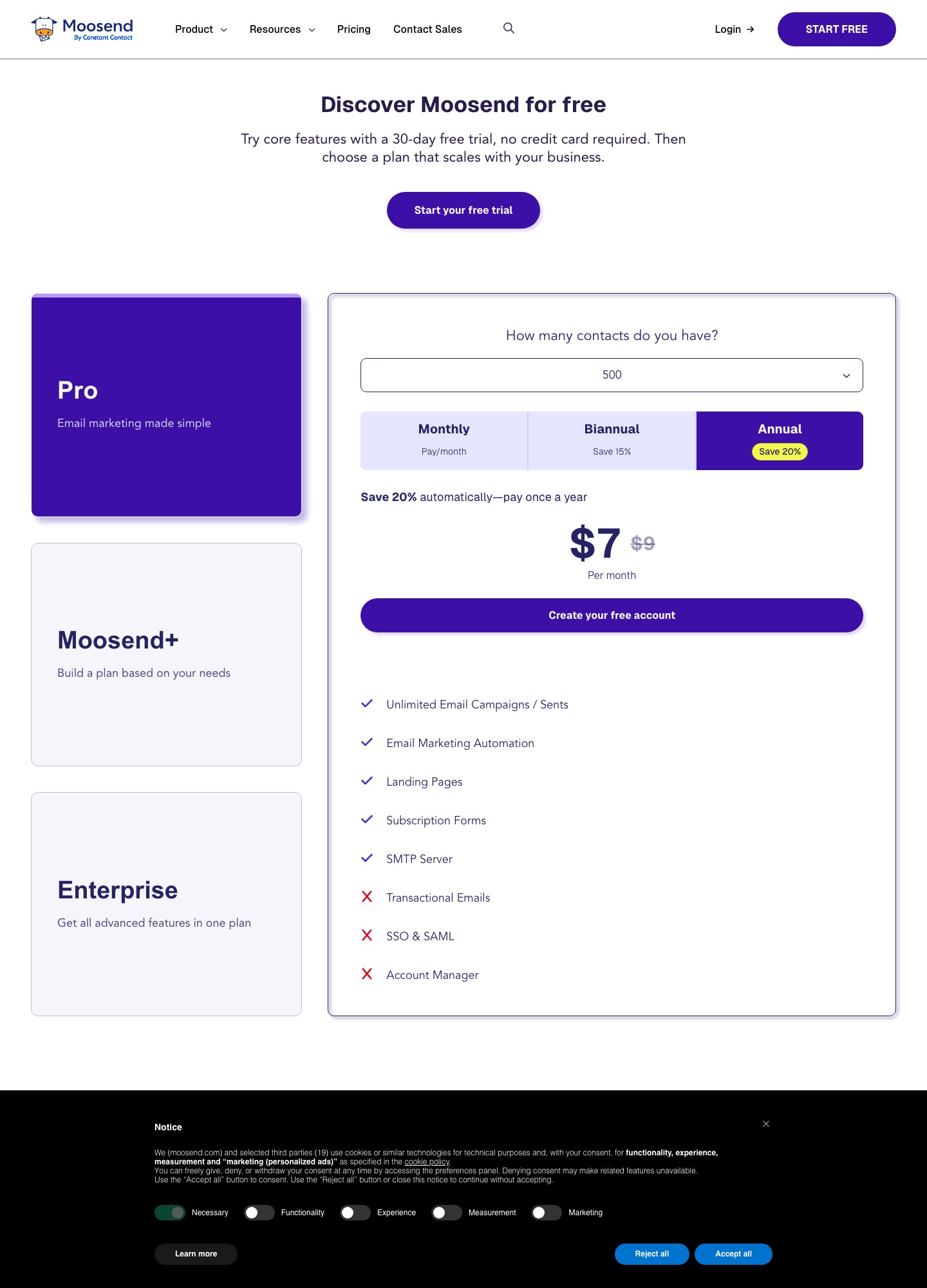
Moosend ha un listino d'ingresso molto basso: il piano Pro parte da 7 $/mese a 500 contatti pagando un anno, con automazioni vere. Le alternative hanno senso quando servono rifinitura (MailerLite), ampiezza multicanale (Brevo), profondità ecommerce (Omnisend, Klaviyo) o CRM e vendite (ActiveCampaign).
La risposta breve: per più cura a pari budget vai su MailerLite; per unire SMS e transazionale su Brevo; per ecommerce serio su Omnisend o Klaviyo; per vendere B2B su ActiveCampaign.
Sintesi
Più rifinitura → MailerLite. Da 12 $/mese con editor migliore. Più canali → Brevo. 9 $/mese con SMS e transazionale. Ecommerce → Omnisend o Klaviyo. Feed e carrelli veri. Vendite B2B → ActiveCampaign. Scoring e pipeline.
Confronto rapido
| Alternativa | Ideale per | Prezzo | Compromesso principale |
|---|---|---|---|
| MailerLite | Campagne e form semplici | Da 12 $/mese; gratis fino a 250 iscritti | Meno automazioni avanzate |
| Brevo | Marketing + transazionale | 9 $/mese | Modello operativo diverso |
| Omnisend | Journey ecommerce | Gratis + piani | Stretto fuori ecommerce |
| Klaviyo | Profondità commerce | Vedi il listino Klaviyo | Costoso e datoso |
| ActiveCampaign | CRM e vendite | Da 15 $/mese a 1.000 contatti | Più amministrazione |
| Mailchimp | Ecosistema ampio | Standard da 20 $/mese a 500 contatti | Caro a volume |
MailerLite e Brevo: il passo laterale
MailerLite per piccoli team che usano Moosend soprattutto per newsletter, form, landing e sequenze lineari: stessa fascia di prezzo, più cura. Non riprodurrà ogni workflow condizionale o ecommerce — individua prima le poche automazioni che contano davvero.
Brevo quando servono campagne, automazioni base, SMS e transazionale sotto lo stesso account: più ampiezza allo stesso prezzo d'ingresso, con l'avvertenza di tenere separati stream e consensi.
Omnisend e Klaviyo: la via ecommerce
Omnisend quando browsing, carrello, ordini ed eventi prodotto sono il centro del programma: workflow disegnato per merchant. Klaviyo quando servono catalogo, predittivi e attribuzione ricavi oltre un campaign tool generico.
Entrambi chiedono dati store affidabili e configurazione consensi curata: la ricchezza eventi vale solo se i dati sorgente sono attendibili.
Conviene lasciare Moosend per MailerLite?
Solo per editor migliore e landing superiori: come motore automazioni sono equivalenti. Il passaggio ha senso per qualità percepita, non per funzioni.
Quale alternativa scala meglio?
Brevo per prezzo a volumi, Klaviyo per potenza commerce, ActiveCampaign per profondità B2B. Moosend resta il più economico ma anche il più essenziale.
E per un SaaS?
Nessuna di queste è pensata per gli abbonamenti guidati dagli eventi del prodotto: se ti serve quel livello di logica, Customer.io (da 100 $/mese) è il riferimento; per un SaaS piccolo, Brevo riunisce campagne, automazioni ed email transazionali nello stesso account.
Verdetto
Resta su Moosend se i 7 $/mese del piano Pro a 500 contatti (pagando un anno), con flussi veri, bastano. Muoviti verso MailerLite per rifinitura, Brevo per ampiezza, Omnisend/Klaviyo per ecommerce, ActiveCampaign per vendite. Vedi anche Moosend vs Brevo, la classifica completa e le altre alternative.
Contatti o crediti prepagati: come leggere il listino
La pagina prezzi di Moosend propone due modi di pagare: il piano Pro, legato al numero di contatti, e pacchetti di crediti da acquistare in anticipo. Le alternative di questa pagina funzionano quasi tutte con un canone mensile legato agli iscritti o al volume di email. Per confrontare mele con mele devi ridurre tutto a un costo per migliaio di email sul tuo volume reale.
| Voce del listino | Perché conta per chi viene da Moosend | Domanda da fare |
|---|---|---|
| Durata dei crediti | La pagina prezzi dichiara che i crediti acquistati non scadono, quindi un pacchetto grande non va consumato di fretta; resta il costo anticipato | «Posso trasferire o farmi rimborsare i crediti residui se chiudo l'account?» |
| Costo per mille email | Dividi il prezzo del pacchetto per i messaggi inclusi e confrontalo con il canone mensile del tuo volume | «Quanto pago per mille invii a parità di volume mensile?» |
| Liste piccole e invii rari | Con pochi invii l'abbonamento può costare più dei crediti; con invii frequenti accade l'opposto | «Esiste un piano gratuito o un abbonamento d'ingresso adatto alla mia lista?» |
| Funzioni comprese | Automazioni, landing page e report possono essere incluse in uno e a parte nell'altro | «Nel prezzo rientrano automazioni e landing o sono moduli separati?» |
| Aiuto nella ricostruzione dei flussi | Le automazioni non si esportano, quindi qualcuno deve riscriverle | «L'assistenza accompagna la migrazione o c'è solo la documentazione?» |
Scelta rapida se vieni da Moosend
| Se il tuo caso è… | Guarda a… | Perché |
|---|---|---|
| Invii irregolari o stagionali, con picchi concentrati | Restare su Moosend, oppure Brevo a volume | I crediti seguono il ritmo reale degli invii e non pesano nei mesi vuoti |
| Newsletter curate, editor e landing più rifiniti | MailerLite | Stessa fascia di prezzo, ma con un editor che molti trovano più piacevole |
| Email, SMS e transazionali sotto lo stesso account | Brevo | Un solo fornitore per più canali, con stream e consensi da tenere separati |
| Negozio online con carrelli abbandonati e ordini | Omnisend, o Klaviyo se servono catalogo e previsioni | Le automazioni leggono dati d'ordine e di navigazione |
| Vendita B2B con pipeline e scoring | ActiveCampaign | Il CRM e le condizioni di percorso stanno nello stesso strumento |
| Molte integrazioni già costruite attorno a un'app nota | Mailchimp | L'ecosistema è il più esteso, a costo maggiore quando la lista cresce |
Prima di importare la lista rileggi la guida sull'igiene delle liste, e se esiti tra i due modelli di prezzo guarda il confronto Moosend vs Brevo.
Controlli prima di chiudere Moosend
- Crediti residui: controlla quanti ne restano; poiché secondo la pagina prezzi non scadono, puoi consumarli sul vecchio account mentre prepari il passaggio. Non acquistare un nuovo pacchetto prima di averlo deciso.
- Liste e segmenti: esporta le liste con i campi personalizzati e scrivi a parole la regola di ogni segmento, perché dovrai ricrearlo con gli strumenti della nuova piattaforma.
- Automazioni su carta: per ogni flusso annota trigger, attese e condizioni, poi ricostruiscili in ordine di importanza e spegni quelli vecchi solo dopo aver provato i nuovi con un contatto di prova.
- Landing e moduli: ricollega ogni modulo di iscrizione alla nuova lista e verifica che le pagine pubblicate non puntino ancora a Moosend.
- Dati dello store, se passi a un tool ecommerce: collega il negozio e controlla che carrello, ordine e cliente arrivino con gli stessi importi prima di riattivare i flussi automatici.
Termini chiave per chi viene da Moosend
| Termine | Significato operativo |
|---|---|
| Credito email | L'unità di un pacchetto prepagato. Negli esempi della pagina prezzi di Moosend un credito corrisponde a una email inviata a un destinatario, quindi una campagna a 5.000 persone ne consuma 5.000. |
| Abbonamento a iscritti o a invii | Nel primo il canone segue la dimensione della lista, nel secondo il volume dei messaggi. Una lista grande che riceve poche email conviene al secondo modello. |
| Segmento dinamico | Un gruppo che si aggiorna da solo in base a una regola, a differenza di una lista statica che resta com'è finché non la cambi tu. |
| Automazione e campagna | La campagna parte una volta verso un gruppo; l'automazione parte ogni volta che qualcuno soddisfa una condizione, come l'iscrizione o l'abbandono del carrello. |
| Reclamo (segnalazione come spam) | Il destinatario clicca «segnala come spam» invece di disiscriversi. Troppi reclami danneggiano la reputazione del mittente più di qualunque bounce. |
Clausole da leggere prima di lasciare i crediti Moosend
| Clausola | Cosa controllare | Perché |
|---|---|---|
| Scadenza e rimborso dei crediti | Se i crediti residui scadono, se sono rimborsabili o trasferibili alla chiusura | Un pacchetto prepagato non consumato è denaro bloccato: leggilo prima di disdire. |
| Fine della prova e passaggio a pagamento | Cosa accade a dati e automazioni quando termina la prova della piattaforma di arrivo e non hai ancora inserito un pagamento | La nuova piattaforma può sospendere gli invii o cancellare i dati caricati. |
| Esportazione di liste, report e pagine | Che cosa puoi portare via: contatti e campi sì, landing e moduli di norma da rifare | Tieni una copia dei report storici per confrontare i risultati dopo il passaggio. |
| DPA e luogo dei dati | Accordo di trattamento, sub-responsabili e regione in cui sono ospitati i contatti | Se il nuovo fornitore è fuori dall'UE servono garanzie adeguate per i trasferimenti. |
Soppressioni: la lista che non deve restare indietro
Quando lasci Moosend, la lista dei disiscritti e degli indirizzi rimbalzati non si trasferisce da sola. Se importi solo i contatti attivi e dimentichi quella lista, il primo invio dalla nuova piattaforma raggiungerà persone che si erano già cancellate: è il modo più rapido per ricevere reclami e per avere un problema con il GDPR.
Importa le soppressioni prima di qualunque altra cosa, e per le settimane di sovrapposizione tieni un solo elenco di esclusione aggiornato a mano in entrambi gli strumenti. Una disiscrizione ricevuta su Moosend dopo l'esportazione va riportata nella nuova piattaforma entro il giorno stesso, prima di ogni nuova campagna.
Domande frequenti
Come si paga Moosend e cosa cambia rispetto ai piani per numero di contatti?
La pagina prezzi di Moosend offre il piano Pro, il cui prezzo segue il numero di contatti (a 500 contatti il selettore mostra 7 $/mese pagando un anno), e in alternativa pacchetti prepagati di crediti email, ad esempio 350.000 crediti a 350 $ e 500.000 crediti a 500 $, dopo una prova di 30 giorni senza carta di credito. MailerLite fattura in base agli iscritti e Brevo in base al volume mensile. Il modello a crediti è comodo per chi invia in modo irregolare, e la pagina precisa che i crediti acquistati non scadono.
Quanto durano 350.000 crediti se la mia lista è piccola?
Con una lista di 5.000 contatti e quattro invii al mese si usano 20.000 crediti, quindi 350.000 crediti coprirebbero circa 17 mesi, e secondo la pagina prezzi di Moosend i crediti acquistati non scadono. Per una lista piccola come quella, però, il pacchetto è un esborso iniziale di 350 $ che il piano Pro a contatti, Brevo Starter (9 $/mese) o il piano Free di MailerLite fino a 250 iscritti evitano del tutto.
Per un negozio online conviene Omnisend o restare su una piattaforma generalista?
Conviene Omnisend quando le automazioni leggono dati d'ordine e catalogo: la sua pagina prezzi mostra un piano Free con 250 contatti e 500 email al mese e piani superiori con più contatti e SMS. Se le vendite online sono una parte minoritaria dell'attività, una piattaforma generalista con integrazione al negozio può bastare e costa meno da gestire. La scelta dipende da quante automazioni ecommerce attivi davvero.
Posso trasferire automazioni e landing page di Moosend?
Le liste e i contatti si esportano, le automazioni e le landing page di norma no: vanno ridisegnate sulla nuova piattaforma. Descrivi ogni automazione con trigger, attese e condizioni in un documento, poi ricostruiscile in ordine di importanza e spegni quelle vecchie solo dopo aver verificato le nuove con un contatto di prova. Le landing page con moduli di iscrizione richiedono anche di ricollegare i moduli al nuovo elenco.
Quali controlli sul consenso servono prima di importare la lista?
Per ogni contatto dovresti poter dire quando e come si è iscritto: se manca questa traccia per una parte della lista, importarla nella nuova piattaforma significa portare con sé lo stesso rischio. Importa le soppressioni per prime, scarta gli indirizzi rimbalzati e valuta una campagna di riconferma per chi non apre da molto tempo. Il GDPR non impone una durata fissa, ma richiede di poter giustificare perché quei contatti ricevono ancora i tuoi messaggi.