Le migliori alternative a Postmark
Postmark è il riferimento per transazionali che devono arrivare subito, con stream separati e diagnosi immediata. Le alternative hanno senso per API moderne (Resend), infrastruttura programmabile (Mailgun), template collaborativi (MailerSend) o marketing unito (Brevo).
La risposta breve: per API moderne vai su Resend; per controllo infrastrutturale su Mailgun; per unire marketing su Brevo. Resta su Postmark se i transazionali critici funzionano già.
Sintesi
API moderne → Resend. Pulita, economica, amata dagli sviluppatori. Infrastruttura → Mailgun. Validazione, routing, log forensi. Marketing unito → Brevo. Transazionale + campagne a 9 $/mese. Template condivisi → MailerSend. Collaborazione marketing-sviluppatori.
Confronto rapido
| Alternativa | Ideale per | Prezzo | Compromesso principale |
|---|---|---|---|
| Resend | API moderne da sviluppatori | Gratis + a volumi | Meno ampiezza operativa |
| Mailgun | Infrastruttura programmabile | A volumi | Più decisioni operative |
| Brevo | Transazionale + marketing | 9 $/mese | Meno specialistico transazionale |
| SendGrid | Ecosistema ampio economico | Gratis + a volumi | Serve governo interno |
| MailerSend | Template collaborativi | A volumi | Da validare a scala |
Resend e Mailgun: le vie tecniche
Resend per team engineering che vogliono API pulita, template moderni e invio vicino al codice applicativo. Confronta gestione inbound, webhook, soppressioni e requisiti regionali — non solo la superficie API.
Mailgun quando servono API, validazione, log, routing e opzioni infrastrutturali flessibili. Più scelte di configurazione significano più responsabilità su reputazione, retry e incident response.
Brevo e MailerSend: unire i mondi
Brevo quando consegna transazionale e campagne devono stare sotto lo stesso fornitore per team piccoli e medi: tieni separati stream, permessi e consensi così le campagne non toccano i messaggi critici.
MailerSend quando a curare i template devono essere anche i colleghi del marketing: il piano gratuito include 500 email al mese e Hobby copre 5.000 email al mese a 6,30 $/mese con fatturazione annuale (75,60 $ l'anno).
Quando lasciare Postmark?
Quasi mai per motivi tecnici: se i transazionali arrivano veloci e la diagnosi funziona, il cambio aggiunge rischio senza benefici. Cambia solo per unire marketing (Brevo) o per API diverse (Resend).
Quale alternativa costa meno?
Resend e Brevo hanno gratuiti generosi e prezzi a volumi onesti. Postmark si paga per velocità e chiarezza, non per volume economico.
Posso usare Postmark anche per il marketing?
Meglio di no: è disegnato per stream operativi. Le campagne vanno su stream separati o, meglio, su una piattaforma marketing dedicata.
Verdetto
Resta su Postmark se i transazionali critici funzionano. Muoviti verso Resend per API moderne, Mailgun per infrastruttura, Brevo per unificare. Vedi anche Postmark vs SendGrid, la classifica completa e le altre alternative.
Come leggere il listino di un servizio transazionale
Un servizio come Postmark si paga per messaggi inviati, non per contatti: il numero che conta è quante email partono ogni mese dall'app, tra reset, ricevute e notifiche. Per questo il confronto con le alternative va fatto sul tuo volume reale e su ciò che il prezzo include attorno all'invio.
| Voce del listino | Perché conta per chi invia transazionali | Domanda da fare |
|---|---|---|
| Che cosa conta come invio | Il modo in cui il fornitore conta ritentativi, messaggi respinti e destinatari in copia cambia il consumo mensile | «Un messaggio rimbalzato o ritentato consuma quota?» |
| Piano gratuito | Serve a collaudare l'integrazione, non a reggere la produzione | «Dal gratuito posso verificare il dominio e provare i webhook come in produzione?» |
| Flussi di invio separati | Tenere transazionali e broadcast su stream distinti protegge i messaggi critici dalle campagne | «Gli stream aggiuntivi sono inclusi o si pagano a parte?» |
| Conservazione dei log | Per capire perché un reset non è arrivato devi poter rivedere stato e contenuto del messaggio | «Per quanti giorni resta consultabile il dettaglio di un invio?» |
| IP dedicato | Dà reputazione tutta tua ma ha senso solo con volumi regolari e costa un canone separato | «Da quale volume lo consigliate e con che costo mensile?» |
Quale servizio scegliere se lasci Postmark
| Se il tuo caso è… | Guarda a… | Perché |
|---|---|---|
| Reset e ricevute arrivano in fretta e nessuno se ne lamenta | Restare su Postmark | Il passaggio aggiunge rischio a un servizio che funziona |
| Pochi invii e un team che vuole un'API semplice | Resend | Integrazione rapida e documentazione pensata per chi scrive codice |
| Volumi alti e bisogno di routing, validazione e log dettagliati | Mailgun | Più leve infrastrutturali, con più decisioni da governare |
| Anche newsletter e automazioni, nello stesso account | Brevo | Un fornitore solo per transazionali e campagne, con stream da tenere distinti |
| Template ritoccati dal marketing senza toccare il codice | MailerSend | Editor di template condiviso tra sviluppatori e non tecnici |
| Un ecosistema ampio già usato dal resto dell'azienda | SendGrid | API, template e marketing sotto lo stesso marchio, da governare con cura |
Per impostare gli stream prima del passaggio ti servono le basi della guida alle email transazionali; per vedere altri fornitori a confronto c'è la panoramica sugli strumenti transazionali.
Checklist per spostare i transazionali
- Inventario dei messaggi: elenca ogni email che l'app invia (reset, ricevute, inviti, notifiche) con template e punto del codice che la genera, così nessuna resta sul vecchio fornitore per dimenticanza.
- DNS in parallelo: aggiungi SPF e DKIM del nuovo servizio mantenendo quelli attuali finché dura la transizione. Pubblica un solo record SPF, unendo gli «include» dei due fornitori, perché due record SPF separati invalidano il controllo.
- Un messaggio alla volta: sposta prima una notifica a basso rischio, poi le ricevute; il reset password per ultimo, misurando i tempi di consegna con un indirizzo di prova su Gmail e uno su Outlook.
- Webhook e soppressioni: ricollega le notifiche di rimbalzo e reclamo e verifica che l'app smetta di scrivere agli indirizzi respinti, importando anche le soppressioni già accumulate.
- Rete di sicurezza: lascia attivo Postmark per qualche giorno come ripiego, finché i tempi di consegna del nuovo servizio non risultano stabili.
Termini chiave dell'invio transazionale
| Termine | Significato operativo |
|---|---|
| Message stream | Un canale di invio separato dentro lo stesso account, per esempio uno per i transazionali e uno per i messaggi di massa, ciascuno con la propria reputazione e le proprie statistiche. |
| Return-Path personalizzato | Il dominio a cui tornano i rimbalzi. Se è sul tuo dominio, l'allineamento con il mittente visibile migliora e i controlli DMARC passano più facilmente. |
| Webhook | Una chiamata che il servizio fa al tuo server quando un messaggio viene consegnato, rimbalza o riceve un reclamo, così l'app può reagire senza controllare a mano. |
| Soppressione automatica | Dopo un rimbalzo definitivo il servizio smette di scrivere a quell'indirizzo. La lista di soppressione vive presso il fornitore e va esportata quando lo cambi. |
| IP dedicato | Un indirizzo di invio usato solo da te. Dà reputazione tutta tua, ma con pochi invii o volumi irregolari un IP condiviso e ben gestito spesso funziona meglio. |
Clausole da leggere prima di cambiare servizio di invio
| Clausola | Cosa controllare | Perché |
|---|---|---|
| Soglie di abuso e sospensione | Oltre quale tasso di rimbalzi o reclami l'account viene bloccato, con quale preavviso e come si riattiva | Un blocco improvviso ferma reset password e ricevute: devi sapere in anticipo cosa lo provoca. |
| Uso per messaggi promozionali | Se i termini vietano di mandare campagne dallo stream transazionale | Mischiare i due traffici è la causa tipica di reputazione rovinata. |
| Conservazione dei log e esportazione | Per quanto tempo restano consultabili contenuto e stato dei messaggi, e se puoi esportarli | I messaggi contengono dati personali: sapere quanto restano presso il fornitore fa parte del tuo registro dei trattamenti. |
| DPA e sede dei dati | Accordo di trattamento, regione europea disponibile e sub-responsabili | Verifica che il contratto copra i trasferimenti fuori dall'UE. |
Rimbalzi e reclami: cosa porti con te nel nuovo servizio
La lista degli indirizzi respinti si forma nel tempo e resta presso Postmark. Se ne cambi senza esportarla, il nuovo servizio parte da zero e per un po' continuerà a scrivere a caselle che non esistono: i rimbalzi in più si sommano al periodo in cui la reputazione del nuovo mittente è ancora fragile.
Esporta le soppressioni prima della migrazione e importale nel nuovo account. Decidi anche cosa fa l'app quando un indirizzo rimbalza: mostrare un avviso nel profilo, chiedere un'email alternativa o bloccare il reset sulla vecchia casella, invece di ritentare l'invio all'infinito.
Domande frequenti
Quanto costa Postmark a 10.000 email al mese rispetto a Resend e Mailgun?
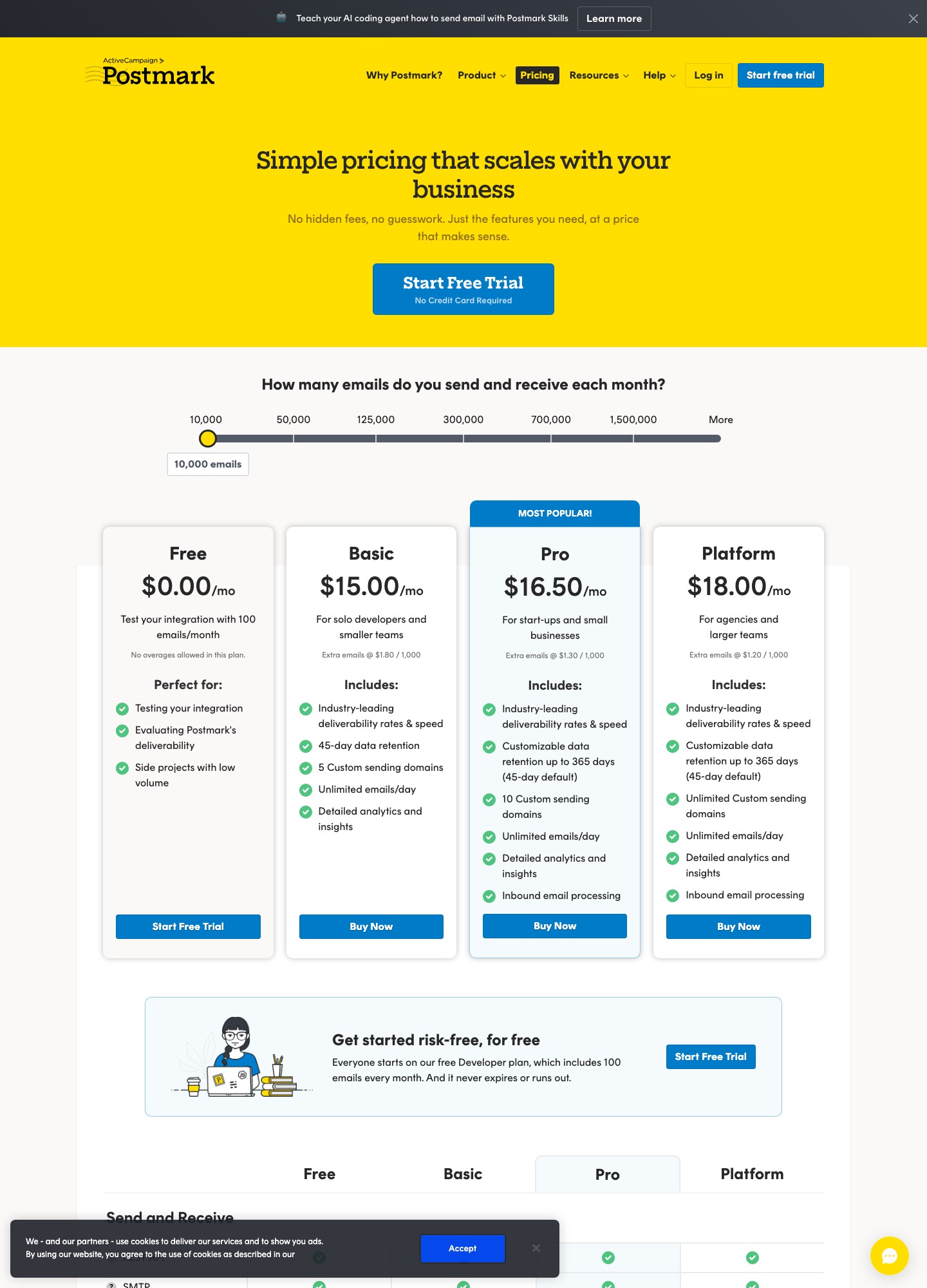
La pagina prezzi di Postmark indica il piano Basic da 15 $/mese per 10.000 email; Mailgun parte allo stesso prezzo (15 $/mese per 10.000 email), mentre Resend chiede 20 $/mese per il piano Pro con 50.000 email, cioè 0,40 $ ogni 1.000 contro 1,50 $ di Postmark Basic. A volumi alti la differenza conta, ma il prezzo per email non misura la velocità di consegna né la qualità della diagnosi.
Come si migra un'applicazione dai messaggi transazionali di Postmark senza perdere consegne?
Procedi per tipo di messaggio: sposta per primi i meno critici, come ricevute o notifiche, e lascia per ultimi reset password e codici di accesso. Autentica il dominio con SPF e DKIM sul nuovo fornitore prima del primo invio e usa un sottodominio dedicato ai transazionali, separato da quello delle campagne. Mantieni attivo Postmark in parallelo finché per due settimane i tassi di consegna non risultano in linea.
Cosa cambia per i webhook di rimbalzi e segnalazioni di spam?
Ogni fornitore ha un proprio formato e propri nomi di evento per rimbalzi, reclami e consegne, quindi il codice che oggi aggiorna la tua lista di soppressione va riscritto sulla documentazione del nuovo servizio. Non copiare il vecchio schema a memoria: leggi la documentazione ufficiale e prova ogni tipo di evento con un indirizzo di test prima di spegnere Postmark. Un rimbalzo non gestito significa riscrivere ripetutamente allo stesso indirizzo.
Se i dati degli utenti sono europei, conta la regione di hosting?
Non esiste un divieto di usare fornitori statunitensi, ma devi disporre di garanzie adeguate per i trasferimenti e dichiarare il fornitore nell'informativa. Alcuni servizi offrono la scelta della regione: Mailgun, per esempio, indica nella pagina prezzi regioni di hosting sia negli Stati Uniti sia nell'Unione europea. Chiedi a ogni candidato dove vengono conservati contenuti e log dei messaggi e per quanto tempo.
Vale la pena passare a un servizio più economico se Postmark funziona bene?
Spesso no. Con 10.000 email al mese il risparmio possibile è di pochi euro, mentre il rischio è cambiare il comportamento di messaggi che i clienti aspettano in pochi secondi. Il cambio ha senso se superi i volumi in cui il prezzo per email pesa davvero, o se vuoi unificare transazionali e marketing sotto un unico fornitore: in quel caso fai i conti sul volume reale, non sul listino di partenza.