Postmark vs SendGrid
La scelta pratica qui è disciplina degli stream contro ampiezza dell'ecosistema: entrambi mandano email transazionali, ma il modello di gestione quotidiana è diverso. Postmark separa nettamente i flussi di messaggi e rende la diagnosi immediata. SendGrid offre un ecosistema più ampio di invio e template.
La risposta breve: scegli Postmark quando chiarezza transazionale, message stream e diagnosi rapida contano di più. Scegli SendGrid quando al team serve un ecosistema più ampio di invio e template.
Sintesi: chi vince per profilo
Transazionali critici (reset, ricevute, inviti) → Postmark. Consegna fulminea e diagnosi in secondi. Volumi misti marketing + transazionale → SendGrid. Un ecosistema per tutto, a prezzo aggressivo. Un account solo per newsletter e transazionale, con budget contenuto → Brevo, da valutare prima di tenere due fornitori.
Tabella comparativa
| Postmark | SendGrid | |
|---|---|---|
| Prezzo di partenza | Basic 15 $/mese per 10.000 email; Free con 100 email/mese (listino) | Essentials da 19,95 $/mese (50.000-100.000 email); prova di 60 giorni (listino) |
| Focus | Solo transazionale, fatto benissimo | Transazionale + marketing |
| Diagnosi invii | Stream separati, log di 45 giorni | Activity feed, filtri potenti |
| Template marketing | Essenziali | Editor completo + automation base |
| Ideale per | SaaS che non perdona ritardi | Volumi misti economici |
Dove Postmark stacca
Velocità e chiarezza: i transazionali partono in secondi, gli stream separano password reset da newsletter di servizio, e quando qualcosa fallisce il log dice perché in linguaggio umano. Per SaaS dove un reset in ritardo significa ticket di supporto, questa affidabilità vale molto più del prezzo per mille email.
Il limite è il perimetro: marketing automation non è il suo mestiere. Va affiancato a una piattaforma marketing — il che significa due strumenti, due fatture, due reputazioni da gestire.
Dove SendGrid tiene botta
Ampiezza ed economia: API solide, template marketing dignitosi, automazioni base e prezzi aggressivi a volume. Per team che mandano milioni di email miste e vogliono un unico fornitore economico, il conto torna.
Il rischio è mescolare classi di messaggi senza governo: transazionali e promozioni sulla stessa reputazione, con deliverability che ne risente. Richiede disciplina interna che Postmark impone per costruzione.
Come confrontarli onestamente
Fai passare le stesse tre classi di messaggi in entrambi: un messaggio critico di account, un messaggio di prodotto di routine e un messaggio lifecycle. Registra tempo di diagnosi dei fallimenti, comportamento delle soppressioni, proprietà dei template e numero di sistemi necessari per spiegare l'esito. Produce una decisione migliore di qualunque confronto sui volumi nominali.
Reset e ricevute critici?
Postmark: la differenza si sente nel primo incidente, quando la diagnosi richiede secondi invece di ore.
Milioni di email miste?
SendGrid per economia di scala, con stream e sottodomini separati per proteggere i transazionali.
Tutto in un account: Brevo
Se la tua priorità è avere campagne, automazioni e messaggi transazionali nello stesso pannello, confronta anche il listino di Brevo, che parte da un piano Free.
Postmark giustifica il prezzo premium?
Se i transazionali sono business-critical sì: un'ora di reset non recapitati costa più di un anno di differenza di prezzo. Altrimenti SendGrid o Brevo bastano.
SendGrid va bene anche per il marketing?
Per campagne base sì; per automazioni serie no — meglio Brevo, ActiveCampaign o una piattaforma dedicata. SendGrid resta prima infrastruttura.
Devo separare transazionali e marketing?
Sotto il milione di email al mese no, se usi sottodomini e stream separati. Sopra, IP dedicati e fornitori specializzati si giustificano.
E se voglio un solo strumento per tutto?
Brevo per PMI generaliste e SendGrid per team con volumi alti: entrambi uniscono transazionale e marketing, a patto di separare i flussi con sottodomini distinti.
Quota inclusa, eccedenza e punto d'ingresso: i listini letti con il calcolo
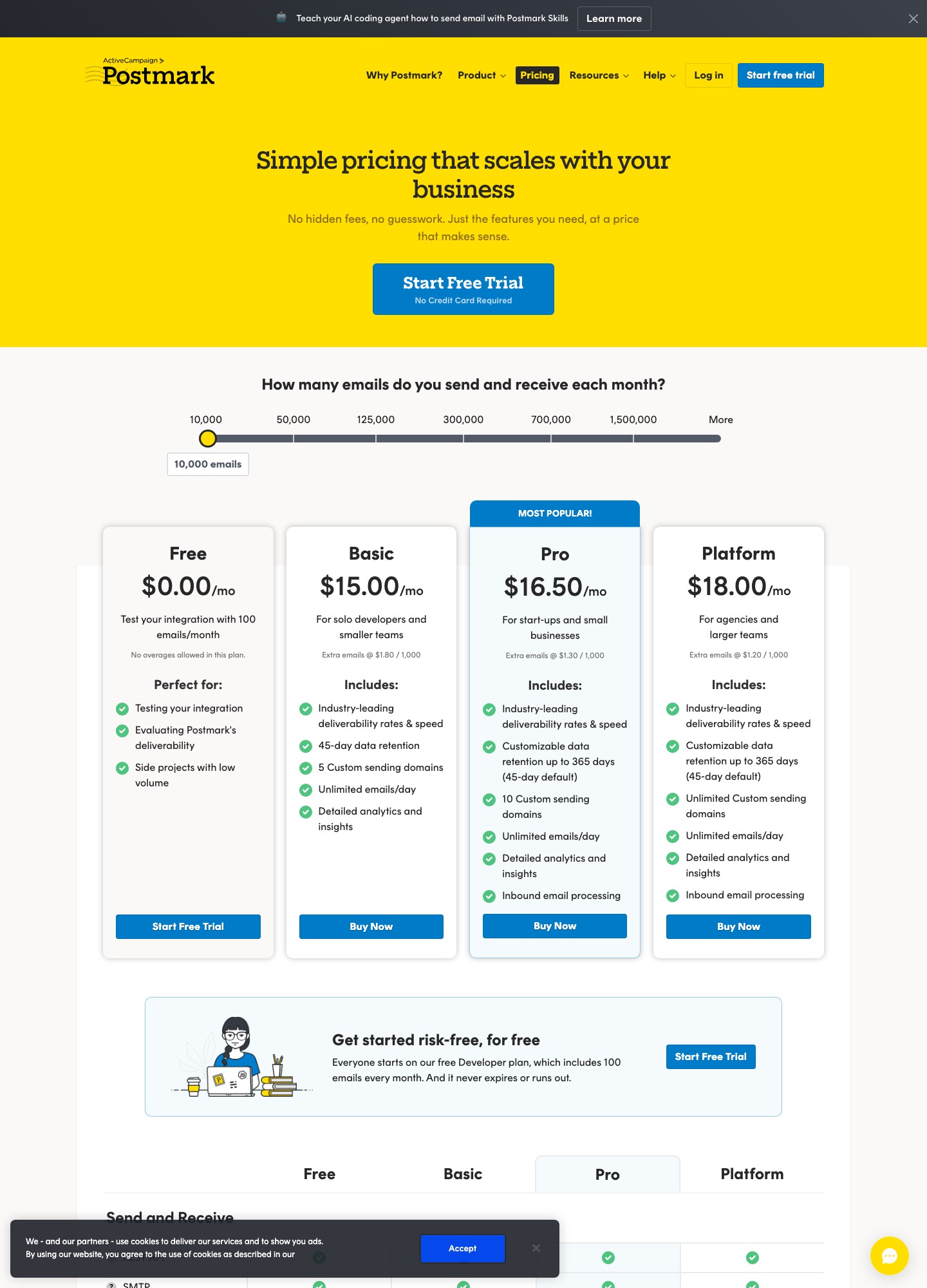

| Voce | Che cosa dicono i listini | Calcolo o domanda |
|---|---|---|
| Tre livelli Postmark a 10.000 email | La pagina prezzi di Postmark indica Basic a 15 $ (1,80 $ ogni 1.000 extra), Pro a 16,50 $ (1,30 $) e Platform a 18 $ (1,20 $), tutti con partenza a 10.000 email al mese. | Basic è il più economico fino a 3.000 email oltre la quota; tra 3.000 e 15.000 extra conviene Pro; oltre 15.000 extra conviene Platform. Nei punti di incrocio i totali coincidono. |
| Esempio con 14.000 email al mese | Quattro migliaia oltre la quota: Basic 22,20 $, Pro 21,70 $, Platform 22,80 $. | Le differenze sono di pochi centesimi per mille email, ma contano per chi invia in modo stabile ogni mese. |
| Come entra SendGrid | Il selettore dell'Email API parte da Essentials a 19,95 $ per 50.000-100.000 email al mese e passa a Pro da 89,95 $ per 100.000-2.500.000; Premier è su preventivo. | A 14.000 email non c'è un gradino più piccolo di Essentials: SendGrid comincia a competere sul prezzo quando ti avvicini a 50.000 invii. |
| Come si prova | Postmark Free: 100 email al mese, senza addebiti per eccesso. SendGrid: 100 email al giorno per 60 giorni, senza carta di credito. | Il Free di Postmark è un banco di prova permanente ma minuscolo; la prova SendGrid dà più respiro per 60 giorni e poi scade. |
| Marketing e IP dedicato | SendGrid separa Marketing Campaigns (Free fino a 2.000 contatti e 6.000 email al mese, poi Basic da 15 $ e Advanced da 60 $) e include gli IP dedicati nel Pro da 89,95 $. | Se ti serve un IP dedicato su Postmark, chiedi al supporto se è disponibile sul tuo piano, a quale costo e da quale volume ha senso attivarlo. |
Postmark o SendGrid: la scelta per tipo di invio
| Il tuo invio | Direzione | Ragione |
|---|---|---|
| Ricevute, conferme d'ordine e reset di un gestionale, circa 10.000-20.000 al mese | Postmark | Il volume sta vicino alla quota inclusa e il costo si legge in due righe; SendGrid avrebbe un gradino di ingresso pensato per 50.000 invii o più. |
| Newsletter e messaggi di sistema da uno stesso fornitore | SendGrid | Ha un prodotto di marketing con piano gratuito fino a 2.000 contatti; usa però sottodomini diversi per non mescolare le reputazioni. |
| Oltre 100.000 email al mese e bisogno di IP dedicati | SendGrid, con preventivo | Dal piano Pro in su gli IP dedicati sono inclusi e Premier è su misura; chiedi comunque un'offerta scritta anche a Postmark. |
| Agenzia che gestisce più clienti con invii separati | Postmark Platform | Il listino lo descrive come il livello per agenzie e team più grandi, con 1,20 $ per mille email extra, il costo più basso dei tre livelli. |
| Un team senza sviluppatori che deve inviare ricevute | Nessuno dei due, a priori | Entrambi richiedono integrazione via API o SMTP; con un team non tecnico un fornitore con interfaccia in italiano o un plugin del gestionale può essere più semplice. |
| Test dell'integrazione prima di decidere | Postmark Free, poi SendGrid in prova | Il primo permette cento messaggi al mese senza costi per eccesso; il secondo ti dà 60 giorni a cento al giorno per provare un flusso vero. |
Per proseguire il confronto leggi SendGrid contro Mailgun, la pagina sulle alternative a Postmark e la guida ai migliori strumenti per email transazionali.
Cinque passi per un passaggio senza perdere consegne
- Classifica i messaggi. Dividi in tre gruppi quelli critici (reset, ricevute, inviti), le notifiche di prodotto e le promozioni, e assegna a ciascun gruppo uno stream o un sottodominio diverso.
- Autentica il dominio mittente. Pubblica SPF e DKIM e imposta DMARC con una politica iniziale di sola osservazione, poi verifica nelle intestazioni che le firme risultino valide.
- Stima il volume con i picchi. Conta anche i messaggi ripetuti, come i reset richiesti due volte, e tieni un margine per i periodi di punta, perché l'eccedenza si paga a ogni mille email.
- Collega gli eventi di rimbalzo al tuo database. Ricevi i webhook di rimbalzo e reclamo e disattiva l'indirizzo nella tua anagrafica, così non continui a scrivere a caselle inesistenti.
- Sposta un flusso alla volta. Inizia dal messaggio meno critico, confronta i tempi di consegna sulle tue caselle di prova e cambia le chiavi API in produzione solo a esito positivo.
Vocabolario dell'invio transazionale
| Termine | Spiegazione |
|---|---|
| Stream | Un canale di invio separato dentro lo stesso account. Tenere i messaggi critici e quelli promozionali su stream distinti permette di leggere i risultati e le statistiche di ciascun tipo senza che si confondano. |
| Eccedenza | Il costo delle email oltre la quota del piano, espresso per mille messaggi. Sul listino Postmark va da 1,80 $ a 1,20 $ a seconda del livello. |
| IP dedicato | Un indirizzo IP usato solo da te per spedire. Dà una reputazione indipendente da quella degli altri clienti, ma va riscaldato gradualmente e ha senso solo con volumi regolari. |
| SPF, DKIM e DMARC | Tre record DNS con cui il dominio dichiara chi può spedire a suo nome, firma i messaggi e indica come trattare quelli che non passano i controlli. |
| Lista di soppressione | L'elenco degli indirizzi a cui non si deve più scrivere (rimbalzi definitivi, reclami, disiscrizioni). Va portata con sé quando si cambia fornitore. |
Cosa negoziare o chiedere per iscritto a un fornitore di invio
| Tema | Domanda da fare | Dove può far male |
|---|---|---|
| Comportamento al limite | Cosa succede quando superi la quota: su Postmark Free non sono previsti eccessi, quindi l'invio si ferma; sui piani a pagamento l'eccedenza si fattura. | Un blocco silenzioso nel giorno di un picco di ordini vale più di qualsiasi risparmio sul canone. |
| Soglie di sospensione | Quali tassi di rimbalzo o di reclamo portano alla sospensione, con quale preavviso e a chi si scrive per riattivare. | Un fornitore che sospende senza avviso interrompe anche i reset password dei tuoi clienti. |
| Conservazione dei log | Per quanto tempo restano consultabili gli esiti di consegna e se puoi chiederne la cancellazione. | Un cliente che contesta di non aver ricevuto una ricevuta va risposto con il log, e deve esistere ancora. |
| Fornitori statunitensi e GDPR | L'accordo di trattamento dei dati, l'elenco dei sub-responsabili e le garanzie per i trasferimenti verso gli Stati Uniti. | Senza questi documenti l'informativa privacy non è completa, anche se i messaggi contengono solo dati di servizio. |
Domande frequenti
Quanto costano Postmark e SendGrid con 10.000 e con 100.000 email al mese?
La pagina prezzi di Postmark indica il piano Basic a 15 $/mese per 10.000 email, con 1,80 $ ogni 1.000 email extra. Il selettore di SendGrid Email API parte da Essentials a 19,95 $/mese per la fascia 50.000-100.000 email, quindi a 10.000 invii non c'è un gradino più piccolo. A 100.000 email la differenza nasce da cosa include ciascun piano, per esempio indirizzi IP dedicati nel Pro da 89,95 $/mese.
Posso fare una prova gratuita prima di integrare l'API?
Postmark ha un piano Free con 100 email al mese e nessun addebito per eccesso, sufficiente per testare l'integrazione. SendGrid offre per l'Email API una prova di 100 email al giorno per 60 giorni senza carta di credito. Per il solo marketing, SendGrid Marketing Campaigns ha anche un piano gratuito fino a 2.000 contatti e 6.000 email al mese.
Come si passa da SendGrid a Postmark senza perdere consegne?
Autentica il dominio mittente nel nuovo servizio con i record SPF e DKIM, poi sposta un flusso alla volta partendo da quello meno critico. Importa o ricrea gli elenchi di soppressione, perché indirizzi respinti o disiscritti non devono ricevere nulla dal nuovo mittente. I template vanno riscritti nel formato di Postmark e testati con messaggi reali prima di cambiare le chiavi API in produzione.
Quale è più adatto a un e-commerce o a un gestionale di una piccola impresa italiana?
Se i messaggi sono ricevute, conferme d'ordine e reimpostazione password e ogni ritardo genera una telefonata al servizio clienti, Postmark isola questi invii in uno stream proprio. Se lo stesso account deve inviare anche promozioni e newsletter, SendGrid riunisce le due funzioni, a patto di usare sottodomini diversi. Per volumi piccoli e nessuno sviluppatore interno, un fornitore con interfaccia in italiano come MailUp o 4Dem può essere più semplice da gestire.
Quali obblighi GDPR comporta usare questi fornitori americani?
Devi nominarli nell'informativa privacy come destinatari dei dati, firmare l'accordo di trattamento dei dati e verificare le garanzie per i trasferimenti extra-UE. I messaggi transazionali di servizio, come una ricevuta, non richiedono il consenso al marketing, ma non devono contenere offerte promozionali: se le aggiungi, valgono le regole delle comunicazioni commerciali. Controlla poi per quanto tempo il fornitore conserva i log di consegna e se puoi cancellarli su richiesta.