Le migliori alternative a Resend
Resend è l'API email che gli sviluppatori amano: pulita, economica, ben documentata. Le alternative hanno senso quando servono stream transazionali con diagnosi immediata (Postmark), infrastruttura programmabile profonda (Mailgun), ecosistema ampio con marketing (SendGrid) o marketing unito (Brevo).
La risposta breve: per affidabilità operativa vai su Postmark; per infrastruttura su Mailgun; per ampiezza economica su SendGrid; per unire marketing su Brevo.
Sintesi
Massima affidabilità → Postmark. Stream separati e diagnosi in secondi. Infrastruttura → Mailgun. Validazione e log forensi. Ampiezza → SendGrid. API + template + marketing base. Marketing unito → Brevo. 9 $/mese tutto insieme.
Confronto rapido
| Alternativa | Ideale per | Prezzo | Compromesso principale |
|---|---|---|---|
| Postmark | Stream transazionali chiari | 15 $/10k email | Poco marketing |
| Mailgun | Infrastruttura e operations | A volumi | Più responsabilità operativa |
| SendGrid | Ecosistema API + marketing | Gratis + a volumi | Superficie ampia da governare |
| Brevo | Marketing + transazionale | 9 $/mese | Meno specialistico API |
| MailerSend | Template condivisi | A volumi | Da validare a scala |
Postmark e Mailgun: affidabilità e controllo
Postmark quando la priorità è consegna transazionale affidabile, stream chiari e visibilità operativa: è volutamente focalizzato, quindi i team che necessitano ampia automazione lifecycle avranno comunque bisogno di un altro layer.
Mailgun per ingegneri che necessitano API, validazione, routing, log e controlli infrastrutturali flessibili. Più flessibilità significa più decisioni su reputazione, retry, soppressioni e gestione incidenti.
SendGrid e Brevo: ampiezza
SendGrid per team che vogliono API di consegna matura, template, analytics e un layer marketing opzionale: confronta con cura versioning template, IP dedicati e soppressioni.
Brevo quando transazionale e campagne devono convivere a budget contenuto: tieni separati stream e consensi e avrai un unico fornitore senza i costi di due.
Quando lasciare Resend?
Quando servono diagnosi operativa immediata (Postmark), validazione e routing profondi (Mailgun) o marketing integrato (Brevo/SendGrid). Per pura API ben fatta, Resend resta difficile da battere.
Quale alternativa scala meglio?
Mailgun e SendGrid per volumi puri; Postmark per affidabilità costante; Brevo per crescere senza raddoppiare fornitori.
E per un SaaS non tecnico?
Un'API pura non basta: servono journey e flussi di onboarding senza scrivere codice. Brevo (Standard da 18 $/mese) li gestisce con un editor visuale e tiene nello stesso account anche i transazionali.
Verdetto
Resta su Resend per API pulita ed economica. Muoviti verso Postmark per affidabilità, Mailgun per infrastruttura, SendGrid per ampiezza, Brevo per unificare. Vedi anche Loops vs Resend, la classifica completa e le altre alternative.
Cosa guardare sul listino prima di lasciare Resend
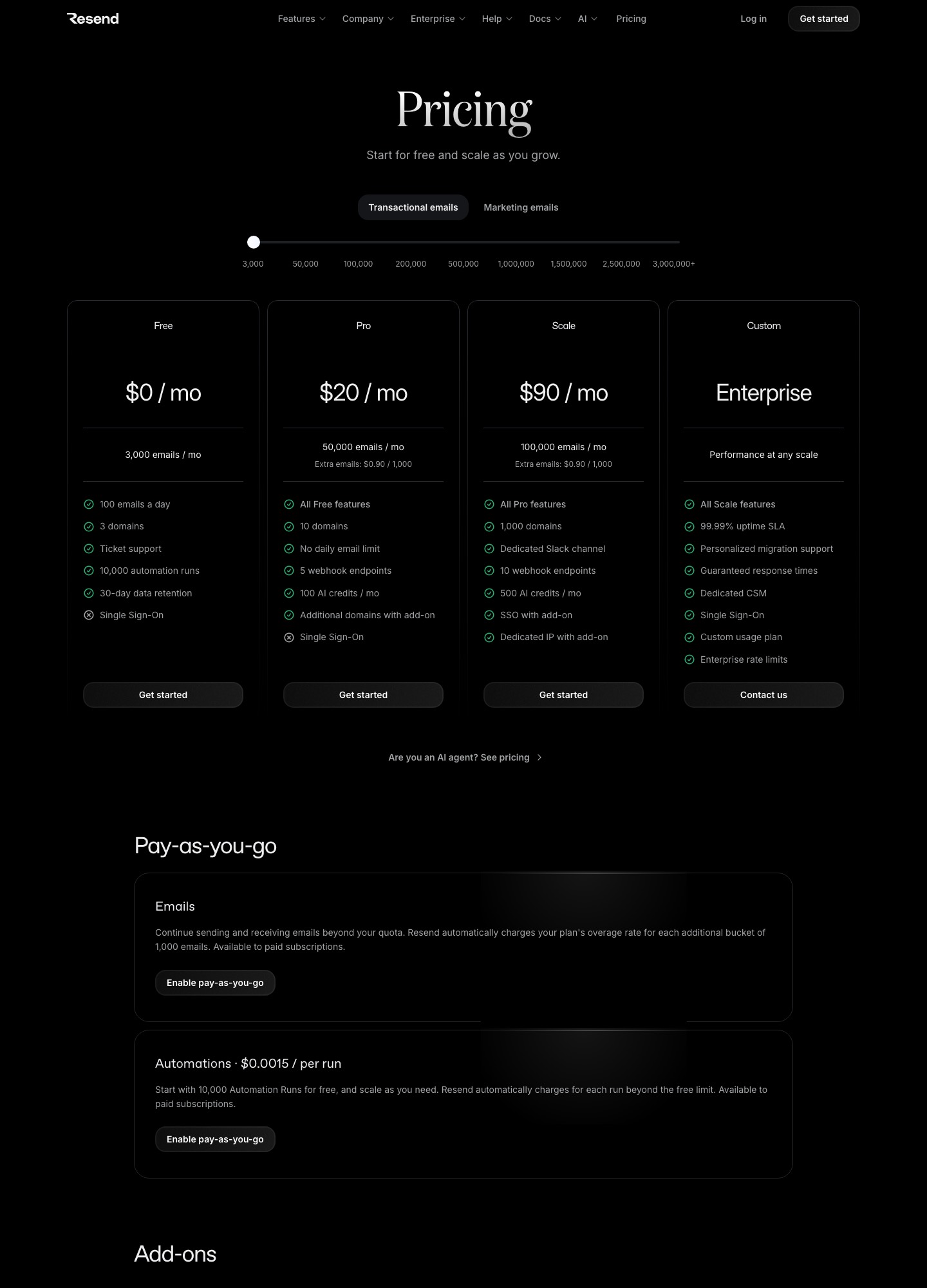
Partire dalla pagina prezzi di Resend è utile perché mostra in modo chiaro quote, domini e funzioni di ogni piano. Per confrontarla con le alternative non basta guardare il canone: conta cosa succede ai limiti e quali parti dell'invio sono comprese nel prezzo.
| Voce del listino | Perché conta per chi invia via API | Domanda da fare |
|---|---|---|
| Tetti mensili e giornalieri | Un picco di registrazioni o una campagna di annuncio può esaurire in un'ora la quota di un giorno | «Esiste un limite giornaliero oltre a quello mensile, e come si alza?» |
| Domini verificabili | Se hai più prodotti o ambienti, ogni dominio o sottodominio di invio può richiedere un piano superiore | «Quanti domini posso collegare senza cambiare piano?» |
| Oltre la quota | Il comportamento all'eccedenza decide se paghi un extra o se gli invii si fermano | «Quando supero la quota vengo bloccato, fatturato a consumo o spostato di piano?» |
| Conservazione dei log | Per indagare un messaggio perso servono i dettagli di consegna oltre le prime ore | «Per quanto tempo restano disponibili log e contenuti inviati?» |
| Parte marketing | Se invii anche newsletter a una lista, potresti pagare un conteggio a parte per i contatti | «Le campagne a un elenco sono incluse o si sommano alla quota transazionale?» |
Quando ha senso cambiare servizio di invio
| Se il tuo caso è… | Guarda a… | Perché |
|---|---|---|
| Reset e ricevute partono bene e l'integrazione è già in produzione | Restare su Resend | Cambiare per curiosità sposta tempo del team senza ridurre rischi |
| Servono diagnosi immediata di ogni messaggio e flussi separati | Postmark | È costruito attorno alla visibilità operativa dei transazionali |
| Routing di email in ingresso, validazione degli indirizzi, controlli infrastrutturali | Mailgun | Più strumenti per ingegneri, con più responsabilità su reputazione e retry |
| API, template e una parte di marketing con un solo fornitore | SendGrid | Superficie ampia, con versioning dei template e soppressioni da governare |
| Colleghi non tecnici che devono scrivere i flussi di onboarding | Brevo | Editor visuale e transazionali nello stesso account |
| I template li ritocca il marketing e non vuoi un deploy a ogni modifica | MailerSend | Libreria di template condivisa fuori dal codice |
Prima di toccare il codice, ripassa la guida alle email transazionali, la panoramica sui servizi di invio per SaaS e la parte sulla deliverability.
Checklist per cambiare servizio di invio
- Un solo punto di chiamata: controlla in quanti posti del codice parte l'invio. Se sono più di uno, raccoglili in una funzione sola, così il cambio di fornitore diventa una modifica localizzata e reversibile.
- Chiavi per ambiente: elenca le chiavi API in uso per sviluppo, test e produzione, e crea per la nuova piattaforma chiavi distinte, con permessi limitati all'invio.
- Dominio su sottodominio: verifica un sottodominio di invio con SPF e DKIM del nuovo servizio prima di modificare il codice, e conferma che i controlli risultino superati da un messaggio di prova.
- Template e variabili: porta i template, ricontrolla le variabili e apri un messaggio di prova in Gmail e Outlook per vedere che il rendering sia identico.
- Passaggio graduale: dirotta prima una piccola parte del traffico sul nuovo servizio, confronta tempi di consegna e rimbalzi con il vecchio, poi sposta il resto.
Termini chiave per chi invia via API
| Termine | Significato operativo |
|---|---|
| Dominio di invio | Il dominio, di solito un sottodominio come mail.tuodominio.it, da cui partono i messaggi. Avere SPF e DKIM propri evita di mescolare la reputazione dei transazionali con quella del dominio principale. |
| Chiave API con permessi limitati | Una chiave che consente solo di inviare, senza poter gestire domini o account. Se finisce per sbaglio in un repository pubblico, il danno resta contenuto e si ruota in pochi minuti. |
| Limite di richieste | Il numero massimo di chiamate API in un intervallo. Quando lo superi il servizio risponde con un errore: l'app deve attendere e riprovare, non perdere il messaggio. |
| Tracciamento di aperture e clic | Un pixel invisibile e link riscritti. Le aperture sono poco affidabili dopo la protezione della privacy di Apple Mail, e i link su un dominio non tuo possono abbassare la fiducia nelle email di servizio. |
| Regione dei dati | Il paese o l'area in cui il servizio conserva log e contenuti. Per gli utenti europei conta per il registro dei trattamenti e per eventuali richieste di accesso. |
Clausole da leggere prima di spostare l'invio
| Clausola | Cosa controllare | Perché |
|---|---|---|
| Limiti di richieste nel piano | Quante chiamate al secondo e quanti invii al giorno sono ammessi, e se un picco viene accodato o rifiutato | Un rilascio con molti invii contemporanei non deve bloccare registrazioni e conferme. |
| Politica sugli abusi | Soglie di rimbalzi e reclami, tempo di preavviso prima della sospensione e canale per contestare | Se l'invio si ferma di colpo, anche i reset password si fermano. |
| Conservazione e accesso ai messaggi | Per quanto tempo restano archiviati contenuto e destinatari, e chi può leggerli | Le email di servizio contengono dati personali che rientrano nel tuo registro dei trattamenti. |
| Regione europea e DPA | Se esiste l'opzione di regione UE, accordo di trattamento firmato e sub-responsabili elencati | Decide quali garanzie servono per i trasferimenti extra-UE. |
| Assistenza sul piano scelto | Canali e tempi di risposta previsti per il livello di abbonamento che acquisti | Nei piani bassi l'assistenza può essere solo documentazione o community. |
Doppi invii e soppressioni durante il passaggio
Per qualche giorno due servizi convivono, ed è il momento in cui l'utente rischia di ricevere lo stesso messaggio due volte, per esempio se un invio fallisce sul primo e il codice lo ritenta sul secondo. Stabilisci quale servizio è quello principale per ciascun tipo di messaggio e non fare mai partire lo stesso evento verso entrambi.
Esporta le soppressioni dall'account attuale e importale nel nuovo: un indirizzo già respinto o segnalato come spam non deve ricevere altri messaggi. Poi conserva per un po' i log del vecchio servizio, perché ti serviranno se un utente scrive che una ricevuta non è mai arrivata.
Domande frequenti
Cosa include il piano gratuito di Resend e quando serve passare a Pro?
Secondo la pagina prezzi di Resend il piano gratuito offre 3.000 email al mese, con un tetto di 100 email al giorno e 3 domini; il piano Pro costa 20 $/mese per 50.000 email e Scale 90 $/mese per 100.000. Il tetto giornaliero è il vincolo che si incontra per primo: un'applicazione che invia 500 notifiche in un'ora di punta non può restare sul gratuito, anche se il totale mensile sarebbe sotto i 3.000.
A 50.000 email al mese quanto costano le alternative?
Resend Pro costa 20 $/mese. Mailgun chiede 35 $/mese per il piano Foundation con 50.000 email, MailerSend mostra 31,50 $/mese con fatturazione annuale per il piano Starter, mentre SendGrid parte da 19,95 $/mese per il piano Essentials. Le condizioni (fatturazione annuale o mensile, funzioni incluse) differiscono, quindi confronta anche cosa è compreso nel prezzo.
Quali parti del codice cambiano se passo a un altro servizio di invio?
Cambiano la chiave di accesso e l'indirizzo dell'API o delle credenziali SMTP, il formato del messaggio inviato, la gestione di errori e limiti di frequenza e i webhook per consegne e rimbalzi. Se tutto passa per un solo punto del codice, la migrazione è questione di ore; se l'invio è sparso in più servizi, conviene prima riunirlo in un modulo e solo dopo cambiare fornitore. Segui la documentazione ufficiale del servizio di destinazione.
Posso usare due fornitori di invio come ridondanza?
Sì, ma funziona solo se il secondo fornitore è già autenticato sul dominio e ha una reputazione costruita: attivarlo in emergenza, senza averlo mai usato, produce quasi sempre consegne scarse. Una soluzione prudente è inviare una piccola quota fissa dei messaggi non critici dal secondo servizio, così da mantenere caldo il dominio. Per un'applicazione con pochi messaggi al giorno la complessità raramente si ripaga.
Per un prodotto con utenti italiani, serve un fornitore europeo?
Non è obbligatorio, ma devi poter spiegare dove transitano e restano i dati dei destinatari e con quali garanzie. Alcuni servizi, come Mailgun, indicano nella pagina prezzi regioni di hosting sia statunitensi sia europee. Qualunque fornitore scelga, serve un accordo di trattamento dei dati e una voce corrispondente nell'informativa privacy del prodotto.