Campaign Monitor vs Constant Contact
Questo confronto è per chi manda campagne, non lifecycle: produzione broadcast curata da un lato, comunicazione semplice per organizzazioni locali dall'altro. Campaign Monitor è lo strumento design-led per newsletter che devono apparire impeccabili. Constant Contact è lo stack familiare per associazioni, proloco e piccole attività che comunicano eventi e avvisi.
La risposta breve: scegli Campaign Monitor per un flusso di campagne editoriali con standard di design e reportistica. Scegli Constant Contact quando servono semplicità assoluta e comunicazione locale senza formazione.
Sintesi: chi vince per profilo
Agenzie e brand editoriali → Campaign Monitor. Template raffinati, test di rendering, report presentabili ai clienti. Associazioni e attività locali → Constant Contact. Curva zero, eventi, annunci semplici. SaaS o PMI in crescita → nessuno dei due: servono automazioni vere: guarda Brevo per il budget, ActiveCampaign per la profondità, Customer.io se hai eventi di prodotto da sfruttare.
Tabella comparativa
| Campaign Monitor | Constant Contact | |
|---|---|---|
| Prezzo di partenza | Da verificare sul listino con la tua lista | Lite da 12 $/mese, Standard da 35 $, Premium da 80 $, in base ai contatti (listino) |
| Piano gratuito | Solo prova | Nessuno, solo prova senza carta di credito |
| Punto di forza | Design e rendering perfetto | Semplicità ed eventi |
| Automazioni | Journey base | Serie di benvenuto semplice |
| Ideale per | Agenzie, editoria, brand | Associazioni, locali, eventi |
Dove Campaign Monitor eccelle
Ogni email sembra impaginata da uno studio grafico: tipografia curata, template che reggono su tutti i client, test anti-spam integrati. Per agenzie che consegnano campagne ai clienti, la qualità percepita è parte del prodotto — e i report sono presentabili senza rielaborazioni.
Il limite è la macchina sotto il cofano: automazioni essenziali, niente logica di lifecycle profonda, prezzo che sale con i volumi senza offrire complessità in cambio. Perfetto per campagne, debole per tutto il resto.
Dove Constant Contact tiene botta
Nessuno si perde: l'interfaccia è la più semplice del mercato e l'onboarding è paziente. Gestione eventi integrata (inviti, registrazioni, promemoria) utile per corsi, sagre, associazioni sportive. Per chi manda due email al mese, la semplicità batte qualunque feature.
Il rovescio: nessuna profondità di automazione, nessun piano gratuito e un prezzo che non si giustifica appena le esigenze crescono. Strumento onesto per bisogni piccoli e stabili.
Cosa misurare prima di scegliere
Confronta tempo di produzione per campagna, frizioni di approvazione, pattern di disiscrizione e affidabilità dei trigger per eventi. Quelle misure rivelano l'aderenza meglio di qualunque punteggio generico "migliore piattaforma". Se il team non riesce a spiegare i risultati delle campagne in una frase, il problema è lo strumento o il processo — e va chiarito prima di pagare.
Test in una settimana
Replica la stessa newsletter in entrambi: impaginazione, test su tre client email, report. Misura minuti di produzione e qualità del rendering. Vince chi ti fa uscire prima con qualità accettabile.
Se servono automazioni
Nessuno dei due è un motore di automazione: a quel punto guarda Brevo per il budget o ActiveCampaign per la profondità. La classifica completa è nella homepage.
Una lista sotto i 250 contatti
Se mandi poche email a poche persone, nessuno dei due è obbligatorio: il piano Free di MailerLite comprende 250 iscritti e 2.500 email al mese, e anche il Free di Mailchimp ha un tetto di 250 contatti. Passa a un piano a pagamento solo quando la lista lo richiede.
Quale ha template migliori?
Campaign Monitor, senza discussione: tipografia, spaziature e rendering sono di un'altra categoria. Constant Contact punta sulla semplicità, non sulla bellezza.
Quale costa meno?
Nessuno dei due ha un gratuito vero: Constant Contact parte da 12 $/mese con Lite, mentre per Campaign Monitor conviene controllare il listino con la tua lista. Per budget minimi con automazioni, MailerLite (da 12 $/mese con Comfort) o Brevo (da 9 $/mese) offrono molto di più.
Vanno bene per un ecommerce?
No: niente feed prodotto né carrelli dinamici seri. Per store, Klaviyo o Drip; per PMI con tienda piccola, Brevo.
E per un SaaS?
Nessuno dei due: servono onboarding basato sugli eventi dell'app e sequenze per il trial. Valuta Loops o Customer.io a seconda della scala e del team che hai.
Regola decisionale
Scegli Campaign Monitor se il design è parte del prodotto che consegni; Constant Contact se la semplicità è il requisito non negoziabile. Se ti servono automazioni, stai guardando la categoria sbagliata: vedi Mailchimp vs Brevo e la classifica completa.
Come si leggono i piani di Constant Contact e di Campaign Monitor
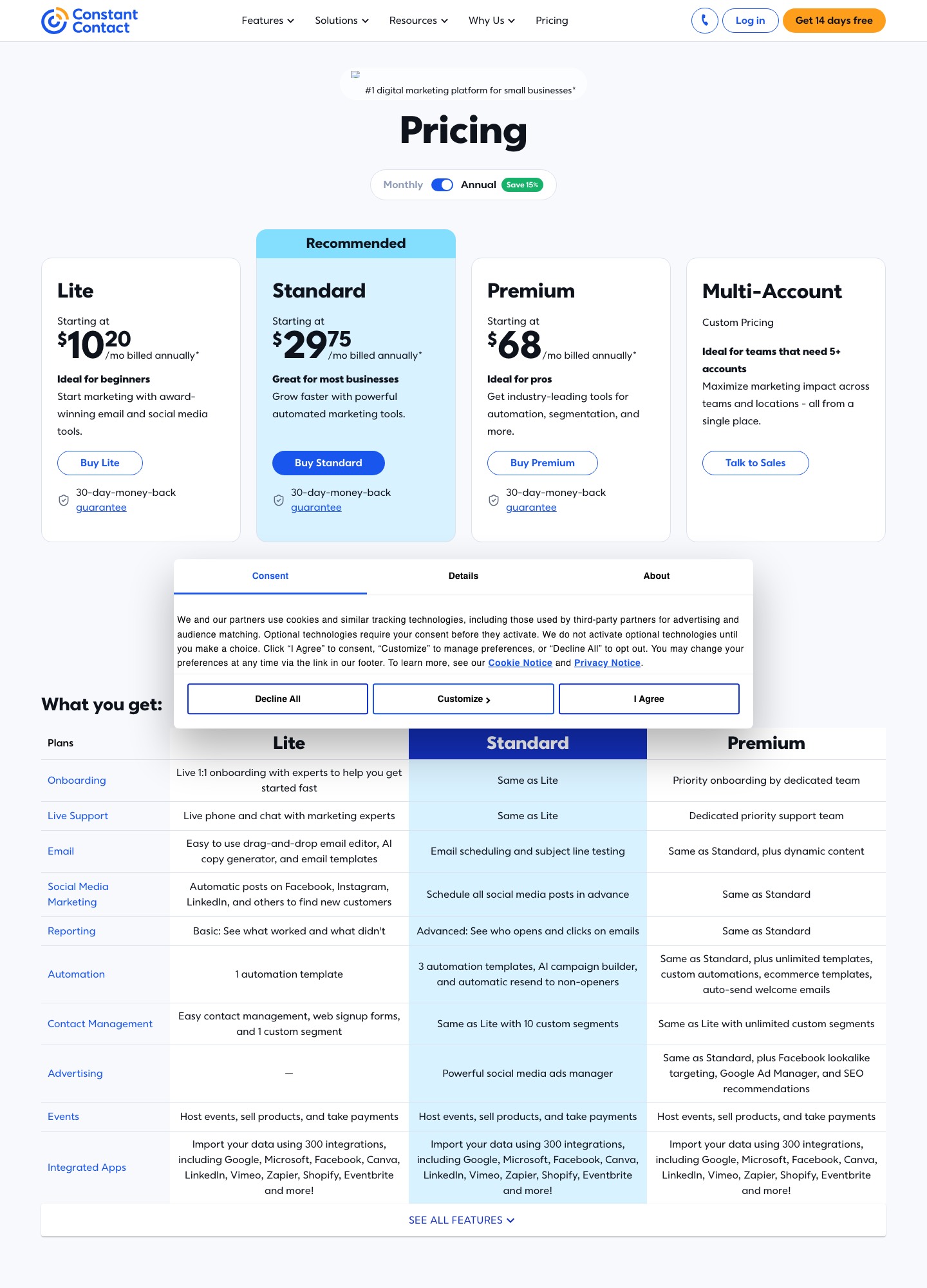
| Voce del listino | Che cosa dicono le pagine prezzi | Che cosa significa per te |
|---|---|---|
| Invii mensili legati ai contatti | La pagina prezzi di Constant Contact indica invii mensili fino a 10 volte i contatti in Lite, 12 in Standard e 24 in Premium | Con 1.000 contatti Lite arriva a 10.000 invii al mese: sufficiente per una newsletter quindicinale, stretto per una mailing list di eventi molto frequenti. |
| Tre livelli, prezzi dipendenti dalla lista | Lite da 12 $, Standard da 35 $ e Premium da 80 $ al mese, dove «da» vale per il livello più basso di contatti | Non sono prezzi per la tua lista: inserisci il numero reale di iscritti prima di fare il conto. |
| Pagamento annuale anticipato | Constant Contact indica un risparmio fino al 15% se si paga l'anno in anticipo (Lite scende a circa 10 $ al mese) | Conviene solo se sei certo di restare dodici mesi e di non cambiare livello. |
| Utenti inclusi | Un utente in Lite, tre in Standard, utenti illimitati in Premium | Per un direttivo o un'agenzia con più persone sulle campagne conta quanto il prezzo di partenza. |
| Campaign Monitor: livelli e preventivo | La pagina prezzi di Campaign Monitor elenca i livelli Lite, Essentials e Premier, più Enterprise su misura | Imposta i tuoi contatti sul selettore o chiedi un preventivo scritto, e confrontalo con quello di Constant Contact per la stessa lista. |
Quale dei due per quale organizzazione
| Chi sei | Orientati verso | Perché |
|---|---|---|
| Agenzia che consegna newsletter ai clienti | Campaign Monitor | Impaginazione curata, anteprime sui client di posta e report da girare al cliente |
| Proloco o associazione con eventi da promuovere | Constant Contact | Inviti, registrazioni e promemoria sono parte del prodotto |
| Direttivo con più volontari sulle campagne | Constant Contact Standard o Premium | Lite ha un solo utente; Standard ne ha tre e Premium non ha limiti |
| Promemoria via SMS agli iscritti all'evento | Constant Contact Premium | La pagina prezzi indica 500 SMS al mese compresi in Premium e un componente aggiuntivo per gli altri livelli |
| Quattro newsletter l'anno a poche persone | Nessuno dei due | Pagare un canone per una lista piccola non ha senso quando esistono piani gratuiti adeguati |
Per orientarti tra le alternative leggi anche gli strumenti email per eventi e quelli per associazioni e no profit.
Cosa decidere prima di aprire un account
- Chi accede. Scrivi quante persone preparano e approvano le campagne, e confronta il numero con gli utenti inclusi nel livello scelto.
- Chi approva il layout. Se un cliente o un direttivo deve vedere l'anteprima prima dell'invio, prova come funziona la condivisione nei due strumenti.
- Calendario degli eventi. Elenca gli eventi dell'anno: se registrazioni e promemoria sono una parte vera del lavoro, verifica che siano disponibili nel livello che pagherai.
- Contatti reali. Conta gli iscritti attivi togliendo rimbalzi e disiscritti, perché è quel numero a determinare sia il prezzo sia il tetto di invii.
- Preventivo scritto di Campaign Monitor. Conserva l'offerta con livello, contatti e durata per poterla confrontare con il conto di Constant Contact.
Parole utili per leggere questo confronto
| Termine | Che cosa significa |
|---|---|
| Rendering | Il modo in cui lo stesso messaggio viene mostrato da Gmail, Outlook o Apple Mail. Un layout che sembra perfetto nell'editor può rompersi in un client che gestisce male l'HTML. |
| Anteprima sui client | Funzione che mostra come apparirà la campagna nei principali programmi di posta prima dell'invio. Campaign Monitor la cita tra le sue caratteristiche. |
| Ottimizzazione dell'orario di invio | Il sistema sceglie quando spedire il messaggio a ciascun iscritto in base a quando di solito legge la posta, invece di mandare tutto alla stessa ora. |
| Tetto di invii mensili | Numero massimo di email che puoi spedire in un mese, in Constant Contact espresso come multiplo dei contatti. Superarlo obbliga a salire di livello. |
| Registrazione all'evento | Modulo con cui gli iscritti confermano la partecipazione a un incontro, seguito da promemoria automatici. Serve soprattutto ad associazioni, corsi e sagre. |
Contratto: le voci che contano per newsletter e comunicazione locale
| Clausola | Cosa controllare | Nota |
|---|---|---|
| Prepagamento annuale | Se lo sconto richiede dodici mesi pagati in anticipo e come si comporta il rimborso o la disdetta anticipata | Per un'associazione che vota il bilancio ogni anno, un prepagamento è accettabile solo se la disdetta è chiara. |
| Salto di livello per superamento dei contatti | Quando il prezzo cambia superando il numero di iscritti del livello e se l'aumento è immediato | Una raccolta di iscritti legata a un evento può far scattare il livello successivo: chiedi se l'aumento è preceduto da un avviso. |
| Account per più clienti o più ruoli | Se un'agenzia può tenere separati i clienti e quali permessi hanno colleghi e collaboratori | Condividere la stessa password con i volontari non è una soluzione e complica la privacy. |
| Accordo sui dati e sede dei server | DPA firmabile e regioni in cui sono conservati contatti e log di invio | Nessuno dei due ha sede in Italia: la documentazione per il titolare del trattamento serve prima dell'importazione. |
Domande frequenti
Come sono fatti i tre piani di Constant Contact e quanto si paga davvero?
La pagina prezzi di Constant Contact indica Lite da 12 $ al mese, Standard da 35 $ (con automazioni, programmazione e test A/B) e Premium da 80 $. Non esiste un piano gratuito, solo una prova senza carta di credito, e il prezzo esatto dipende dal numero di contatti: parti dal livello più basso, poi imposta la tua lista reale prima di decidere. Per Campaign Monitor i numeri vanno letti sul suo listino ufficiale, quindi chiedi un preventivo con la tua lista.
Per un'associazione sportiva o una proloco quale dei due è più sensato?
Constant Contact, se la priorità è mandare inviti e annunci senza imparare nulla: la gestione degli eventi con registrazioni e promemoria è parte dell'offerta. Campaign Monitor ripaga l'impegno quando la newsletter è una vetrina che deve apparire curata, per esempio per un'agenzia che consegna le campagne a un cliente. Se la proloco manda quattro email l'anno, prima di pagare valuta un piano gratuito di MailerLite, che include fino a 250 iscritti.
Come si passa da Constant Contact a Campaign Monitor senza perdere le disiscrizioni?
Esporta l'elenco completo dei contatti con lo stato di ogni iscritto, comprese le disiscrizioni e i rimbalzi, e importa nel nuovo strumento anche la lista di soppressione prima di caricare gli iscritti attivi. I template non si trasferiscono bene: rifai l'impaginazione nel nuovo editor e invia un test sui client più usati dal tuo pubblico. Se un contatto si era disiscritto e lo reimporti come attivo, hai violato il suo consenso.
Cosa devo preparare per il GDPR se scelgo uno di questi due strumenti in Italia?
Nessuno dei due è un fornitore con sede in Italia, quindi nell'informativa privacy devi indicare il fornitore come responsabile del trattamento, firmare l'accordo di trattamento dei dati e verificare le garanzie per i trasferimenti extra-UE. Chiedi al supporto in quali regioni sono conservati contatti e log di invio. Il modulo di iscrizione deve registrare data e testo del consenso, perché la prova resta a carico dell'organizzazione che invia.